
AI meeting notes: keep decisions from getting lost in a polished summary
Separate discussion, confirmed decisions and open questions, or the notes will not help your team act.
Read storyContext, source material and review criteria are more useful than a long list of requests to make something sound good.

You asked an AI to prepare a reply to a client and received polished prose containing promises your company never made. Fixing it can take longer than writing the email yourself. Start with a short brief that would also make sense to a person.
State who will read the result, what they already know and what decision they need to make. Instead of “write sales copy,” try: “Explain to the owner of a small café what materials a delivery page needs. After reading, they should gather photographs, a menu and ordering terms.” Add constraints: do not invent prices, deadlines or service capabilities.
Do not paste an entire conversation into the prompt indiscriminately. Extract only the facts needed for the reply. For a practice example, replace real names and contact details with fictional ones. First decide which information may be shared with the tool at all.
Show one successful result and explain what makes it useful: short paragraphs, a specific next step and no promotional promises. Ask for missing information to be listed separately. That list helps reveal gaps before publication.
Review the work with three questions: are all the facts supported by the source, is the next step clear, and has any important limitation disappeared? For recurring tasks, keep the tested template alongside examples of mistakes. Improve it in response to actual feedback, rather than after every new answer.
A prompt template does not guarantee accuracy. The publication’s author must verify numbers, links and promises. Confidently stated errors are discussed in the NIST Generative AI Risk Profile.
Continue the topic and work through the next step.
Separate discussion, confirmed decisions and open questions, or the notes will not help your team act.
Read story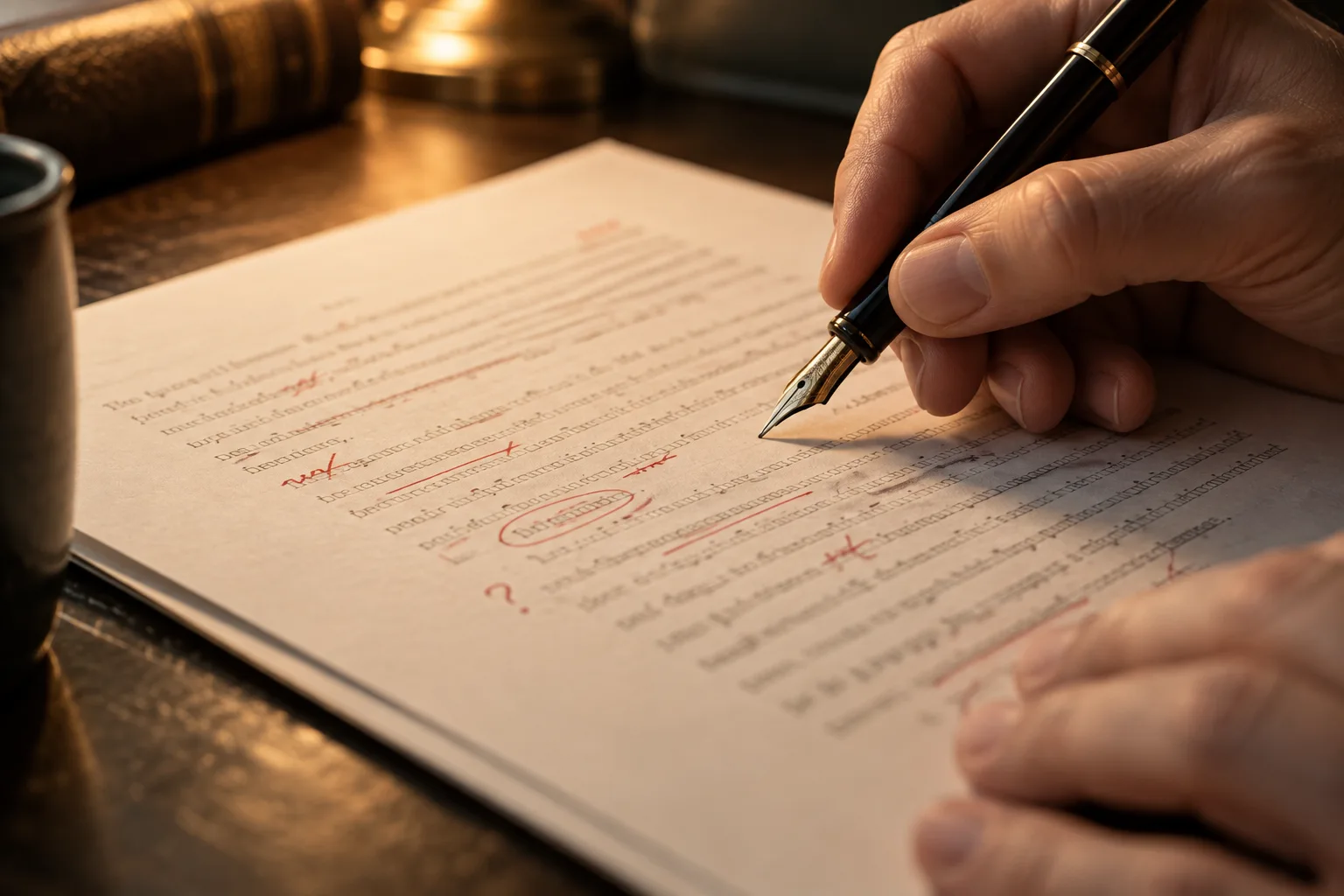
Check facts and meaning first, then structure and language. This order reduces repeated revisions.
Read story
Start with one repeatable task, define who checks the result and measure the entire process, including corrections.
Read story